POPD Perfect Ornament Placement: A Designer Review
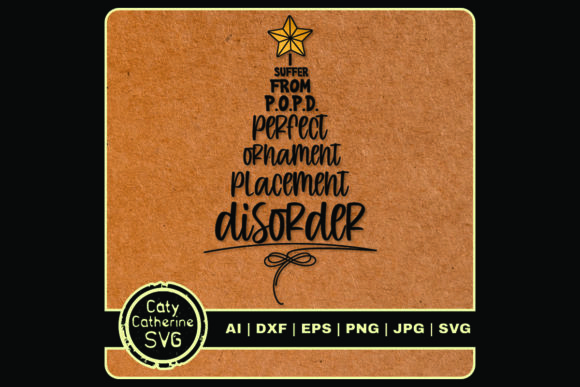
As someone who has spent years navigating the intersection of digital design and physical stitching, I approach every new asset with a critical eye. The market is flooded with graphics that look stunning on a screen but fall apart when converted to thread. When I first encountered POPD Perfect Ornament Placemet, designed by Caty Catherine, my immediate reaction was one of amusement followed by professional curiosity. The concept—"I Suffer From POPD Perfect Ornament Placement Disorder"—is a witty nod to the obsessive nature of many crafters and holiday decorators. It taps into a specific humor that resonates deeply with the community of makers, Etsy sellers, and small shop owners who understand the struggle of symmetry.
The Visual Impact and Design Personality
In its raw Graphics format, this SVG cut file presents a clean, bold statement. The typography is legible, and the accompanying Christmas tree motif strikes a balance between whimsical and structured. For an embroidery designer, the first thing I look for is how well the negative space is handled. In POPD Perfect Ornament Placemet, the layout suggests a design that could translate well into a dense fill stitch without becoming muddy, provided the conversion is done correctly. The mood it creates is lighthearted yet relatable, making it an excellent candidate for holiday-themed merchandise where personality is just as important as technical precision.
However, moving from a digital file to a machine embroidery design requires careful consideration. The text-heavy nature of the phrase means that letter spacing and font weight are critical. If the letters are too thin, they may require excessive satin stitching, which can pucker thin fabrics. Conversely, if they are too thick, the stitch density might become unmanageable in a standard hoop size. This is where the practical application begins to separate a good graphic from a great embroidery project.
Real-World Application: The Holiday Tote Bag Scenario
To truly evaluate POPD Perfect Ornament Placemet, let's imagine a real-life scenario. Picture yourself preparing a custom embroidered tote bag for a local craft fair or an Etsy listing. You want a product that stands out in a sea of generic red and green designs. You load the file into your digitizing software, aiming for a 5x7 inch hoop. As you visualize the placement on a sturdy canvas tote, the design feels substantial enough to be a focal point.
The humor of the phrase "Perfect Ornament Placement Disorder" works exceptionally well on items like tote bags, aprons, and kitchen towels. These are everyday items used by people who likely share this same obsession with order and decoration. When a customer sees this on a finished product, they aren't just buying a bag; they are buying a piece of identity. This connection drives customer trust and engagement. For a craft business, offering a design that speaks directly to the niche interests of your audience can significantly boost sales during the holiday season.
Imagine also using this on a sweatshirt. The contrast of white thread on a dark heather grey fabric would make the text pop, creating a high-quality custom apparel item. However, the stretchiness of the knit fabric introduces a challenge. Without the proper stabilizer, the intricate details of the text and the tree branches could distort. This is why testing the design on scrap fabric is non-negotiable. You must ensure that the fill stitch covers the background evenly without sinking into the fabric weave, which would ruin the clarity of the message.
Navigating Technical Challenges and Fabric Choices
While POPD Perfect Ornament Placemet holds promise, there are specific areas where caution is required. Small hoop sizes, such as those found on portable machines or cap hoopers, might force the text to shrink beyond readability. Tiny lettering is the enemy of clear embroidery; if the characters become too small, the running stitch outlines may bleed together, resulting in a blobby, unprofessional look. Therefore, this design is best suited for medium to large projects where the text can breathe.
Fabric texture is another variable. On highly textured materials like terry cloth or heavy denim, the fine details of the Christmas tree ornament might get lost. The thread needs to sit on top of the fibers, not sink into them. For baby embroidery or delicate nursery decor, the thickness of the thread and the stiffness of the backing must be carefully managed to ensure the garment remains soft and safe. Similarly, on curved surfaces like caps, the distortion of the text across the curve can make the long phrase difficult to read unless the design is specifically adjusted for that shape.
Darker fabrics present their own set of hurdles. To make the design stand out against black or navy backgrounds, you will need a high-density underlay and potentially multiple layers of thread. This increases the cost and time per unit, which is a crucial factor for commercial embroidery pricing. Always test your thread colors on the actual fabric you plan to sell. What looks vibrant in a printable mockup might appear dull or washed out once stitched.
Strategic Use for Makers and Entrepreneurs
For the Etsy seller or boutique owner, POPD Perfect Ornament Placemet offers a unique opportunity to create limited-edition holiday collections. The design fits perfectly into categories like personalized gifts, holiday home decor, and funny apparel. Its appeal lies in its specificity; it targets a known pain point with humor, making it highly shareable on social media. This kind of viral potential can drive significant traffic to your shop.
However, before integrating this into your inventory, you must confirm the licensing terms. While the product description mentions it is an SVG file designed by Caty Catherine, it does not explicitly detail commercial usage rights for finished goods versus reselling the digital file itself. As a responsible maker, always verify whether you can sell items made with this design and if there are restrictions on the number of units you can produce. Using a design without proper clearance can jeopardize your brand consistency and legal standing.
Final Thoughts on Execution and Value
Ultimately, the success of POPD Perfect Ornament Placemet depends on the skill of the person executing it. It is a strong design asset that captures the spirit of the season with a clever twist. When applied correctly—on the right fabric, with the right stabilizer, and at an appropriate scale—it elevates a simple garment into a conversation starter. It adds value to the finished product by offering more than just decoration; it offers a story.
I recommend treating this design as a premium offering. Do not rush the process. Take the time to adjust the stitch count, check the pull compensation, and ensure the hoop size accommodates the full phrase without crowding. Whether you are making an embroidered patch for a jacket or a decorative pillow cover for a living room, the attention to detail will reflect in the final quality. By following these practical steps, you ensure that the humor and charm of the design shine through, resulting in a product that customers will love and proudly display.