Am I Ready for Monday No: A Designer’s Review
As an embroidery designer who has spent countless hours digitizing, testing, and stitching out designs for both personal projects and client work, I have developed a keen eye for what works in the hoop and what looks better on a screen. When I first encountered Am I Ready for Monday No, my initial reaction was one of amused recognition. We all know that feeling. But beyond the relatable humor, I needed to assess whether this graphic held up under the needle. This is not just a funny phrase; it is a visual statement that needs to translate cleanly into thread.
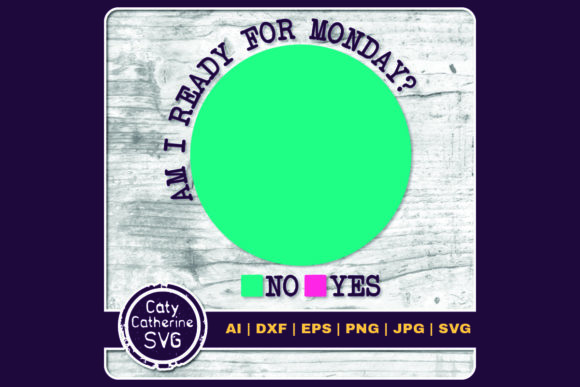
The design, created by Caty Catherine, presents itself as a funny pie chart SVG cut file. For those of us in the Crafts and Graphics space, we know that a concept is only as good as its execution. The pie chart motif is clever because it breaks up the text with geometric shapes, offering a nice balance between negative space and filled areas. This balance is crucial when moving from a digital vector to a physical machine embroidery design.
First Impressions and Visual Personality
The mood of Am I Ready for Monday No is casual, witty, and slightly self-deprecating. It fits perfectly into the current trend of "relatable content" that drives engagement on social media and sells well in boutique shops. Visually, the layout feels modern. The combination of typography and the pie chart graphic creates a focal point that draws the eye without being overly cluttered. For an embroidery project, this means the design has a clear hierarchy. The text communicates the joke, while the chart adds visual interest and breaks up long lines of lettering, which can sometimes look stiff if stitched entirely in satin or fill stitches.
I appreciate that the design is provided in multiple formats, including SVG, Transparent PNG, EPS, DXF, JPG, and AI. While I primarily evaluate the potential for stitching, having access to the vector files like SVG and EPS allows me to inspect the paths and nodes. This is vital for understanding how the shapes will behave when converted into stitch data. If you are a digital product seller or an Etsy seller, these formats also give you flexibility for creating printable mockups or hybrid projects that combine cutting and stitching.
Real-World Application: The Sweatshirt Test
To truly evaluate Am I Ready for Monday No, I imagined placing it on a high-quality, mid-weight cotton sweatshirt. This is a staple item for any craft business or small shop product line. The relaxed nature of the quote pairs naturally with casual apparel. In this scenario, the design would likely sit centered on the chest or slightly off-center for a more contemporary look.
When stitching onto fleece or French terry, stitch density becomes a critical factor. A pie chart involves distinct sections. If these sections are filled with dense fill stitch patterns, they can cause puckering on stretchy fabrics. However, if the design utilizes a mix of satin stitch borders and lighter fills, or even running stitch details for the chart lines, it will lay flatter. As a reviewer, I advise checking the specific stitch file settings if you are purchasing a pre-digitized version, or carefully digitizing it yourself to ensure the density matches the fabric weight.
For a personalized gift or a custom apparel order, this design shines because it is universally understood. It does not require niche knowledge. A customer buying this for a friend who hates Mondays will instantly get the joke. This immediacy boosts buyer engagement and reduces the need for lengthy product descriptions.
Considerations for Different Hoop Sizes and Fabrics
One of the strengths of this design is its scalability, but there are limits. If you are working with a small hoop size, such as a 4x4 inch hoop, you must ensure the text remains legible. Tiny lettering can become a mess of thread if the stitch count is too high for the character size. I recommend testing the design on scrap fabric first, especially if you plan to shrink it down for an embroidered patch or a baby item.
Speaking of baby items, while the sentiment is adult-oriented, the visual style could be adapted for a playful nursery decor piece if the wording were changed, but for Am I Ready for Monday No, it is best suited for teen and adult markets. On textured fabrics like linen tea towels or canvas tote bags, the design needs strong contrast. A dark thread on a light background works best here. If you are stitching on dark fabric, consider using a white or bright colored thread for the chart segments to make the "no" portion pop.
Curved surfaces, such as caps, present another challenge. The pie chart is geometric and rigid. Stitching it on a curved cap brim or front panel requires careful hooping and possibly a cut-away stabilizer to prevent distortion. The straight lines of the chart segments must remain straight after stitching, or the illusion of the graph is lost.
Commercial Viability and Brand Consistency
For commercial embroidery and digital embroidery file sellers, this design offers strong potential. It fits into the "work life" and "humor" categories, which are evergreen niches. When building a brand, consistency is key. If your shop focuses on witty, modern graphics, Am I Ready for Monday No aligns well with that aesthetic. It enhances brand consistency by reinforcing a voice that is approachable and fun.
However, professionalism matters. Even though the message is casual, the stitching must be clean. Loose threads, poor tension, or misaligned colors can undermine the perceived value of the finished product. Customers trust handmade items to have a certain level of care. A well-executed version of this design signals quality, whereas a poorly stitched one looks like a mistake.
Practical Designer Notes
Before you commit to production, keep these practical tips in mind:
- Test on Scrap Fabric: Always run a test stitch-out on the same type of fabric you intend to use for the final product. This helps you identify any pulling or puckering issues.
- Check Thread Color Contrast: The pie chart relies on color differentiation. Ensure your chosen thread colors have enough contrast against each other and the background fabric.
- Review Stitch Density: If you are digitizing this yourself, keep the density moderate. Too much thread buildup can make the garment uncomfortable to wear.
- Confirm Licensing: Since this is a design by Caty Catherine, always check the license terms before selling finished items or redistributing the digital files. Respect intellectual property rights to maintain a reputable craft business.
- Mockup Testing: Use black and white mockups to check the readability of the text. If the text disappears in grayscale, it may lack sufficient contrast in real life.
In conclusion, Am I Ready for Monday No is a charming and commercially viable design when handled with technical care. It bridges the gap between digital graphic appeal and tactile embroidery art. For makers, Etsy sellers, and hobbyists, it offers a quick win for creating engaging products. Just remember that the humor lands best when the stitching is sharp, the colors are vibrant, and the fabric choice supports the structure of the design. With the right preparation, this graphic can become a standout piece in your portfolio or shop.